
What’s the Real Difference?
If you’ve spent any time shopping for sustainable clothing or bedding, you’ve likely seen the terms bamboo rayon and bamboo viscose used—sometimes interchangeably, sometimes as if they’re completely different materials. The reality is much simpler (and a bit misunderstood): bamboo rayon and bamboo viscose are essentially the same fabric, just labeled differently depending on region, marketing language, or regulatory preferences.
Let’s break down what that means, how bamboo fabric is actually made, and what its environmental impact really looks like.
Are Bamboo Rayon and Bamboo Viscose Different?
Short answer: No.
Both bamboo rayon and bamboo viscose refer to a regenerated cellulose fiber made from bamboo pulp. The difference in naming comes down to:
- “Viscose” – More commonly used in Europe and in technical textile contexts
- “Rayon” – More commonly used in North America
- “Bamboo viscose” / “bamboo rayon” – Marketing terms to indicate the source (bamboo)
From a manufacturing standpoint, the process is the same. Both involve breaking down bamboo into a pulp, chemically dissolving it, and then regenerating it into soft fibers that can be spun into fabric.
Why Bamboo Needs to Be Processed
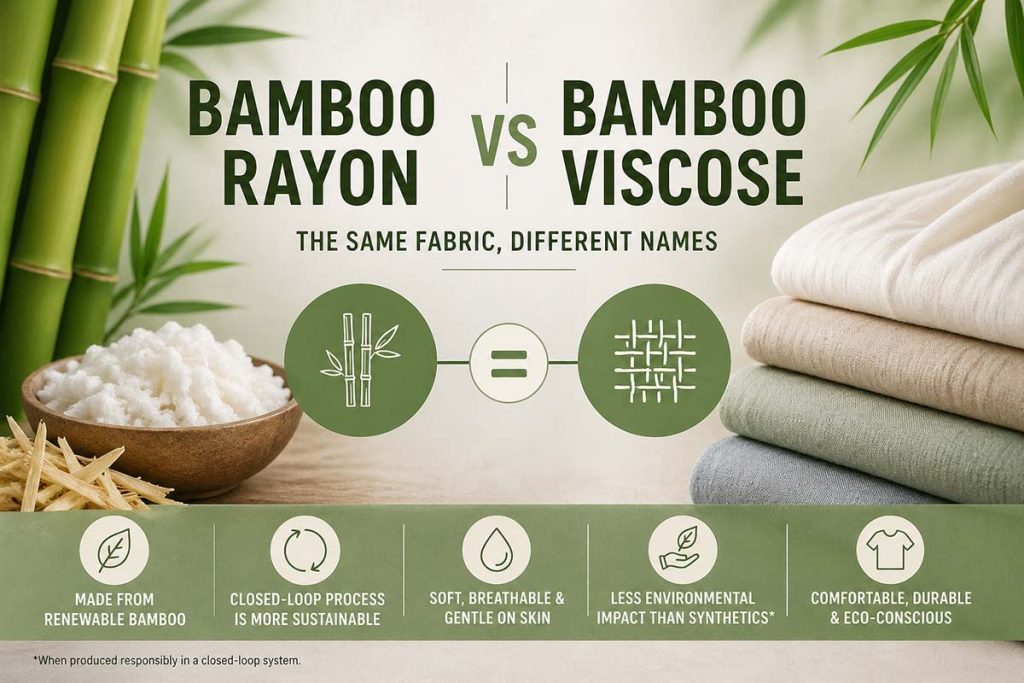
A common misconception is that bamboo fabric is made by simply crushing or weaving the plant directly into textiles. In reality, bamboo is a hard, woody plant—closer to wood than cotton.
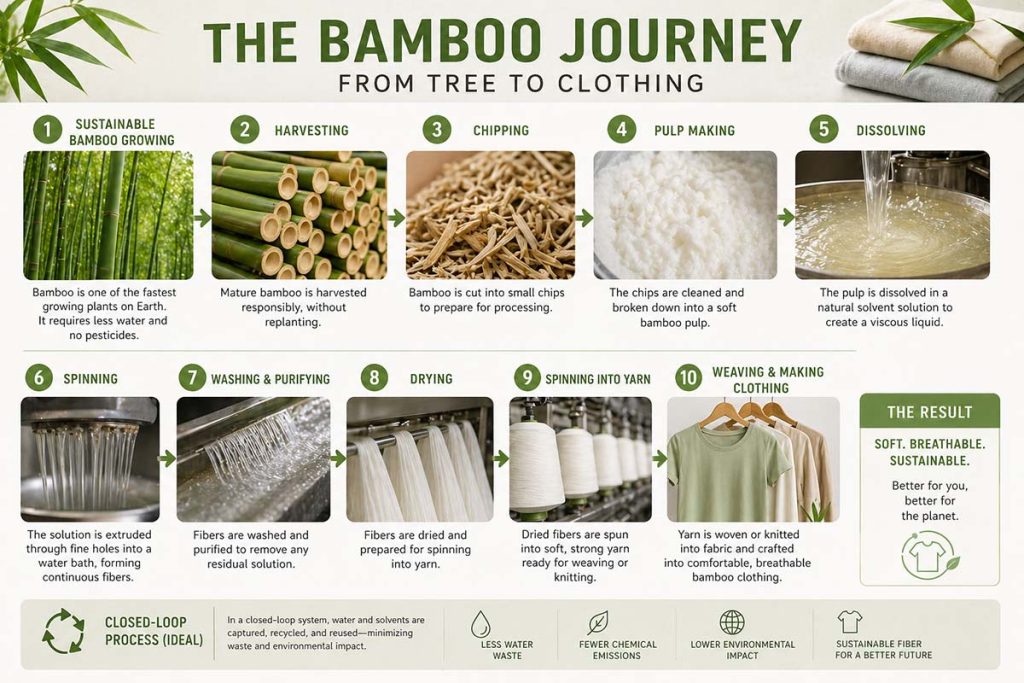
To turn bamboo into wearable fabric:
- The plant is harvested and chipped
- It’s processed into a cellulose pulp
- The pulp is dissolved into a viscous solution
- Fibers are regenerated and spun into yarn
Without this transformation, creating soft, wearable fabric from bamboo would be nearly impossible. This is why nearly all bamboo textiles on the market are forms of rayon/viscose.
Closed-Loop vs Conventional Processing
This is where the real environmental distinction lies—not in the name, but in how the fabric is made.
Closed-Loop Systems (More Sustainable)
In a closed-loop process:
- Chemicals used to break down bamboo are captured and reused
- Waste and emissions are significantly reduced
- Water usage is more controlled
This method is similar to how fibers like lyocell are produced and is considered far more environmentally responsible.
Conventional Processing (Less Sustainable)
In traditional viscose/rayon production:
- Chemicals may not be fully recovered
- Wastewater can be released into the environment if not properly managed
- Higher environmental impact due to emissions and resource use
Environmental Impact: The Bigger Picture
It’s true that chemicals are used in producing bamboo rayon/viscose. However, context matters.
When produced responsibly (especially in closed-loop systems), bamboo fabric:
- Uses renewable plant material
- Requires less land and water than many conventional crops
- Biodegrades more easily than synthetic fibers
Compared to petroleum-based fabrics like polyester or nylon, bamboo viscose:
- Has a lower long-term environmental footprint
- Doesn’t shed persistent microplastics in the same way
- Relies less on fossil fuels
That said, not all bamboo fabrics are created equal. The sustainability largely depends on manufacturing transparency and standards.
Comfort and Skin Sensitivity
One of bamboo fabric’s biggest advantages is how it feels—and how it performs on the skin.
Most bamboo rayon/viscose fabrics are:
- Exceptionally soft (often compared to silk or cashmere)
- Breathable and moisture-wicking
- Naturally smooth, reducing friction on sensitive skin
Because of this, bamboo fabrics are widely considered safe and comfortable for people with sensitive skin, including those prone to irritation.
Other Key Benefits of Bamboo Fabric
Beyond sustainability and comfort, bamboo rayon/viscose offers several practical benefits:
- Temperature regulating – Helps keep you cool in summer and warm in cooler conditions
- Odor resistant – Naturally reduces odor buildup
- Lightweight and drapey – Ideal for activewear, loungewear, and bedding
- Durable with proper care – Holds shape and softness over time
FAQs: Bamboo Rayon vs Bamboo Viscose
1. Is bamboo rayon more eco-friendly than bamboo viscose?
No—they are the same material. Sustainability depends on the manufacturing process, not the name.
2. Are chemicals in bamboo fabric harmful?
The production process uses chemicals, but in closed-loop systems, these are largely recovered and reused. The final fabric is safe for wear.
3. Is bamboo fabric better than polyester?
In many ways, yes. Bamboo viscose:
- Is plant-based
- Biodegrades more easily
- Doesn’t rely on fossil fuels in the same way
- Typically feels more breathable and natural on skin
4. Can bamboo fabric be considered sustainable?
It can be—if produced responsibly. Look for brands that prioritize:
- Closed-loop production
- Certified manufacturing processes
- Transparency in sourcing
5. Is bamboo fabric good for sensitive skin?
Yes. Its soft texture and breathability make it a popular choice for people with sensitive or reactive skin.
6. Why do brands use different names for the same fabric?
Mostly for regional preferences, marketing, and labeling regulations. “Viscose” and “rayon” are technically interchangeable terms.
Final Thoughts
The debate between bamboo rayon and bamboo viscose is largely a matter of semantics. What truly matters is how the fabric is made, not what it’s called.
When produced in a responsible, closed-loop system, bamboo viscose/rayon offers a compelling balance of:
- Comfort
- Performance
- Reduced environmental impact compared to synthetics
For consumers looking to make more informed choices, the key is to look beyond the label and focus on transparency, production methods, and brand values.
Leave a Reply